Dog Body Language: What Your Dog Is Really Saying (and How You Should Respond)


If dogs could talk, life would be easier, right?
The thing is, they do talk, just not with words. Dogs use their body language to express how they feel. Learning to understand those signals can be the difference between a calm cuddle and a preventable bite.
Here are the most common emotional states your dog might be showing and what you should do in response.
Why Understanding Dog Body Language Is Important
Let’s start with a startling stat: According to the American Veterinary Medical Association, over 4.5 million dog bites occur in the U.S. every year. That’s a TON of bites.
Whether you are dealing with your own dog or a dog you’ve never met, having the ability to recognize when a dog is scared, overwhelmed, or asking for space can keep you from being part of that statistic.
It’s also important to understand your dog’s body language from a relationship-building perspective. By understanding when your dog is nervous and knowing when you need to advocate for them, you can build a stronger bond and make your dog more comfortable.
A Few Words of Caution
Before we go over the body language cues of different dog emotions, we encourage you to keep a few things in mind:
A dog with a wagging tail isn’t always happy (this is just something we see people misunderstand constantly, so we had to call it out)
A dog might not show every cue listed in each section, so don’t think they have to check off every bullet point to qualify for that particular emotion.
If you are ever in doubt about how your dog is feeling or are struggling to read their body language cues, give them space. It’s better to give space than get bitten.
Learn More: Preventing Dog Bites
What a Submissive Dog Looks Like
Submissive body language is a dog’s way of saying, “I’m no threat.” Watch for these signals:
Avoiding direct eye contact
Crouching low to the ground
Ears back or flattened
Licking lips or air licking
Rolling over and exposing their belly
Submissive urination
Tucked but relaxed tail
What To Do: Interact Calmly
Use a soft, calm voice and gentle movements with dogs like this. Their confidence is probably lacking. Avoid looming over them or reaching quickly. Instead, let them come to you.
If the dog rolls over, don’t rush to rub their belly. This might not be an invitation to play but a way of saying they’re nervous.
Instead, try to build confidence through gentle, positive reinforcement and low-stress exposure to people, dogs, and new environments.
What a Confident Dog Looks Like
Confident dogs tend to take charge in social settings (causing some people to classify them as “dominant”), but they aren't aggressive unless challenged or provoked.
Body language cues that a dog is confident include:
Chest out, forward stance
Direct eye contact but not a hard stare
Mounting behaviors
Standing tall and still with head and ears held high
Tail held upright, possibly wagging in a slow, wide arc
What To Do: Interact Appropriately
Stay calm and assertive with these types of dogs. There's no need to dominate back. Just be clear and consistent. Avoid rough play or confrontational body language like staring down or hovering.
These dogs need structure and boundaries (e.g., clear rules for greetings, doorways, food, etc.). Otherwise, they can get unruly. If their behaviors become pushy, consult a trainer to channel their confidence constructively.
What a Calm/Relaxed Dog Looks Like
When a dog is feeling comfortable, they will show it in the following ways:
Ears in a neutral position
Loose body and tail
Lying on their side or belly with legs stretched out (they may even show their belly)
Mouth slightly open, soft eyes
What To Do: Interact!
This is your green light! Go ahead and interact gently. Your dog feels safe and at ease.
What an Excited Dog Looks Like
When it comes to an excited dog, these are the signs to look for:
Bouncing or zooming around
Eyes bright, possibly dilated
Panting with a wide mouth
Wagging tail (usually fast and wide)
What To Do: Interact!
If you are dealing with an excited dog, it’s time to channel that energy! Offer playtime, a walk, or training games.
However, keep in mind that overexcitement can lead to overstimulation, so be ready to help them calm down if needed.
What a Happy Dog Looks Like
We all want our dogs to be happy! If your dog is doing any of the following, give yourself a pat on the back:
Ears slightly back
Leaning into touch or nudging you
Relaxed tail wag
Soft, squinty eyes
What To Do: Interact!
Enjoy the moment! Happy dogs are confident and connected. This is the sweet spot for bonding, cuddles, and training.
What a Sad Dog Looks Like
Yes, dogs can be sad. Here are some body language cues that your dog may be feeling down:
Avoiding eye contact
Ears pulled back
Excessive sleeping or lack of appetite
Head or tail hanging low
Slouched posture
Whining or soft whimpering
What To Do: Engage With Your Dog
If your dog is feeling down, spend quality time with them through gentle play, petting, or walks. You can also engage their brain with puzzle toys, sniff walks, or training games to stimulate a natural dopamine release.
Additionally, watch for health issues, as lethargy or appetite changes could be a sign of illness. Always check with your vet if sadness persists. Plus, use positive reinforcement to reward any signs of engagement or playfulness.
What a Confused Dog Looks Like
Dogs can get confused when they’re unsure about what’s being asked, when they’re learning something new, or if they’re in an environment that feels unfamiliar or overstimulating.
Here are some signs your pup is confused:
Ears perked forward or swiveling
Head tilts
Lip licking or yawning
Looking back and forth
Paw lift
Stopping mid-action
What To Do: Help Them Out
If your dog is confused, be clear and consistent with commands and schedules. Staying calm and praising them when they do the right thing can also be helpful.
If verbal commands aren't working, try using body cues and hand signals, as these may make more sense to your dog and reduce confusion.
What a Scared Dog Looks Like
There will inevitably be situations that make your dog scared. Watch for:
A tucked tail or low, quick wags
Cowering or backing away
Potential growling or showing teeth
Shaking or freezing in place
Wide eyes (often showing the whites, or “whale eye”)
What To Do: Give Space
Don’t approach or force interaction. Give the dog space and remove any stressors if possible.
If it's your dog, calmly guide them away and offer gentle reassurance. If it’s not your dog, don’t engage.
What a Stressed, Nervous, or Anxious Dog Looks Like
A stressed dog will look a little bit different than a scared dog. Watch for things like:
Ears pinned back
Full body shakes (similar to when they try to shake water off after a bath)
Lip licking or yawning
Pacing or sudden scratching
Potential growling or showing teeth
Tucked tail or low, quick wags
Turning head away or avoiding eye contact
Showing their belly in submission
What To Do: Take a Minute and Assess
This one is tricky and can take some assessment. The reality is that sometimes your dog does need to be worked slightly above threshold in order to grow. It's similar to the concept that people have to step outside their comfort zones to grow.
Ultimately, it’s probably best to hit pause if your dog is showing these signs. Let them reset. If you’re in a new environment or trying something new, slow down and offer treats, space, or a break. Also, consider consulting with a trainer to make sure you are on the right path.
What an Amped-Up or Overstimulated Dog Looks Like
An amped-up or overstimulated dog can be absolute chaos. Look for things like:
Jumping, barking, mouthing
Rapid, jerky movements
Tail may be high and stiff
Zoomies or difficulty settling down
What To Do: Bring the Temperature Down
Redirect that energy with training, sniffy walks, or mental enrichment toys. Teaching calm behaviors like “settle” or “mat work” helps your dog learn to regulate themselves.
Overstimulation is common in puppies and adolescent dogs, so patience is key.
What a Defensive Dog Looks Like
If your dog is feeling like they need to protect themselves, you may see intimidating body language like:
Fur may be raised (hackles)
Growling or barking while backing away
Showing teeth while trying to avoid conflict
Tail low or tucked
What To Do: Give Space But Hold Your Ground
This dog is saying, “Please don’t push me.” Do not punish them. These are warning signals, not bad behavior.
Give them space, but don't give up your ground. You don't want to reinforce that intimidating behavior will get you to leave (which is what they might be hoping happens).
Keep in mind that a defensive dog may bite if they feel like there's no way out. So, make sure you don’t corner them. Give enough space that they can move away from you if they want.
What an Angry Dog Looks Like
Yes, dogs can get mad! If you’ve ticked off a dog, they may exhibit:
A fixed, hard stare
Growling with ears forward
Stiff, frozen body posture
Teeth bared in a snarl or potential snapping
What To Do: Stay Calm and Give Space
Stay still, don’t run or shout, and avoid eye contact. If it’s your dog, consult a professional behaviorist or a trainer, especially if these body language cues are ones you are seeing consistently.
What an Aggressive Dog Looks Like
Dealing with an aggressive dog is never a situation you want to be in, but it’s important to understand when you are dealing with a dog who is truly aggressive. Look for:
Deep growls or barks
Hackles raised, stiff tail
Lunging or charging
Showing teeth, snapping, or biting
What To Do: Stay Calm and Leave the Dog Alone
Do not approach or attempt to handle a dog like this. Remove yourself from the situation slowly, calmly, and safely. Whatever you do, DO NOT run since this may trigger their prey drive.
If aggression is happening at home, seek help from a certified dog behaviorist or professional trainer. Many aggressive behaviors stem from fear or poor communication and can improve with the right plan.
Our Favorite Dog Body Language Infographics
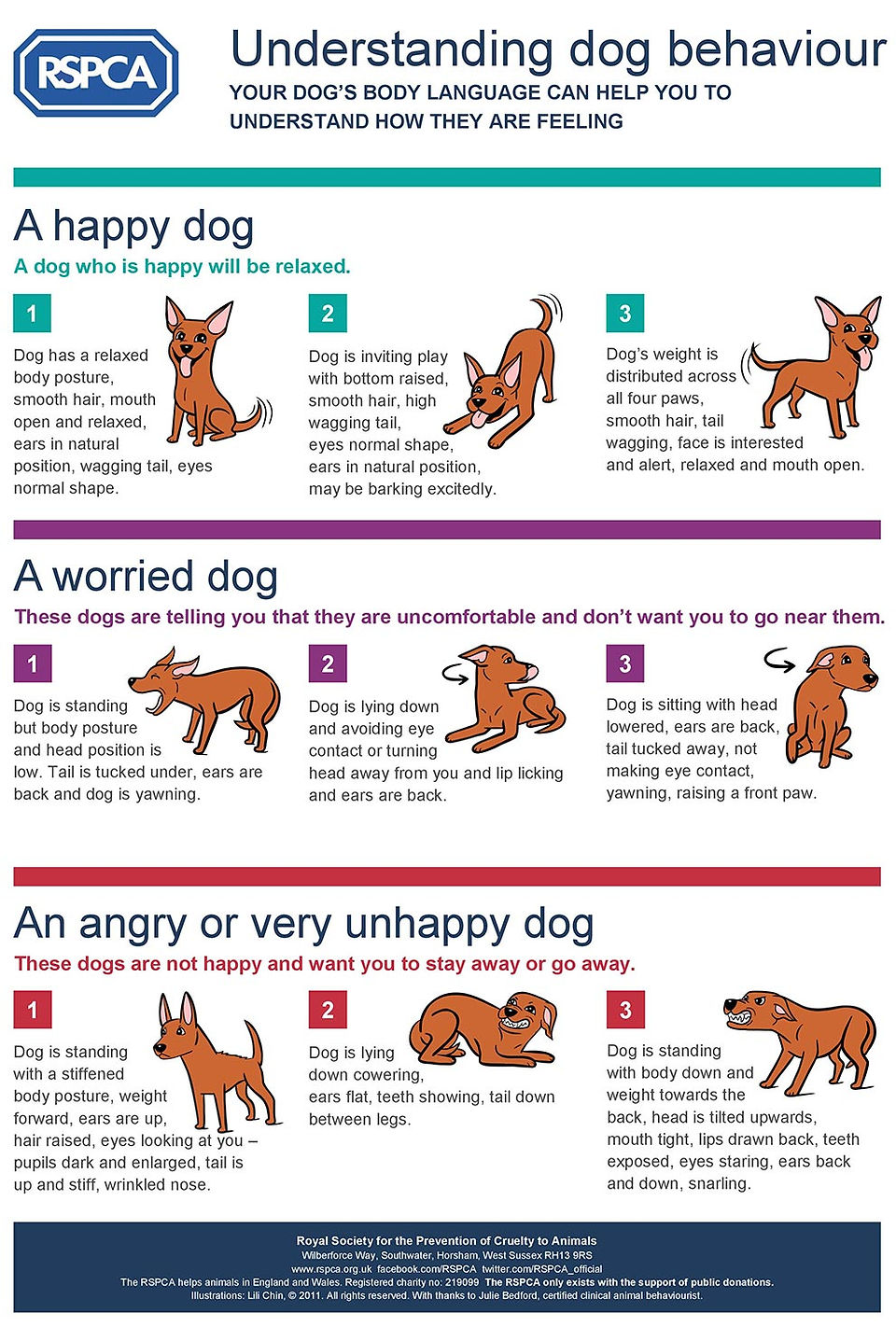
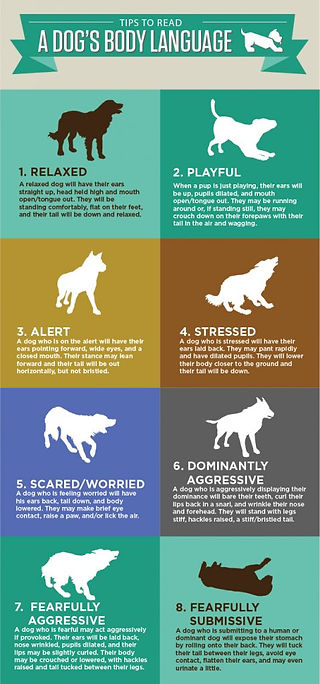
Writing them out is one thing, but seeing them is another. We get it! We are visual learners, too.
We have a couple of dog body language graphics that we share with all our fosters to help everyone in their home learn how to read dog body language better. We've included them (and a few others we like) below!



Final Thoughts
The more you understand your dog's body language, the better your relationship will be, and the safer everyone will stay. Make sure everyone in your household understands these cues to minimize the chances of anyone getting bitten.
Sources
ACK. (2025, June 12). How To Read Dog Body Language. Retrieved from https://www.akc.org/expert-advice/training/how-to-read-dog-body-language/
Kaushal, G. (2025, May 10). Understanding Canine Body Language. Retrieved from https://sploot.space/resources/dog-body-language
AVMA. (2025, April 10). National Dog Bite Prevention Week (April 13-19): Avma’s Simple Steps To Prevent Bites and Keep People, Pets Safe. Retrieved from https://www.avma.org/news/press-releases/national-dog-bite-prevention-week-april-13-19-avmas-simple-steps-prevent-bites
The Frickey Law Firm. (2018, June 25). Prevent Dog Bites by Knowing the Signs. Retrieved from https://www.frickey.com/blog/know-the-signs-of-aggressive-dogs/
BarkBusters. (n.d.). Understanding Dog Body Language. Retrieved from https://www.barkbusters.co.uk/dog-training-tips/understanding-dog-body-language
Best Friends. (n.d.). Dog Body Language: Signs of Comfort, Stress, and More. Retrieved from https://bestfriends.org/pet-care-resources/dog-body-language-signs-comfort-stress-and-more
Oregon Humane. (n.d.). Doggie Language. Retrieved from https://www.oregonhumane.org/wp-content/uploads/DoggieLanguage.pdf
PawMaw. (n.d.). Learning and Understanding Dog Body Language. Retrieved from https://www.pawmaw.com/blog/dog-body-language
PetCloud. (n.d.). How To Read and Understand Dog Behaviour. Retrieved from https://www.petcloud.com.au/d/blog/how-to-read-and-understand-dog-behaviour/


Comments